
August 5, 2026
More Than Beauty: How Art Supports Well-being
Why cultural experiences can become a meaningful part of life, particularly during periods of depression, loneliness, isolation, or a loss of meaning and pleasure.
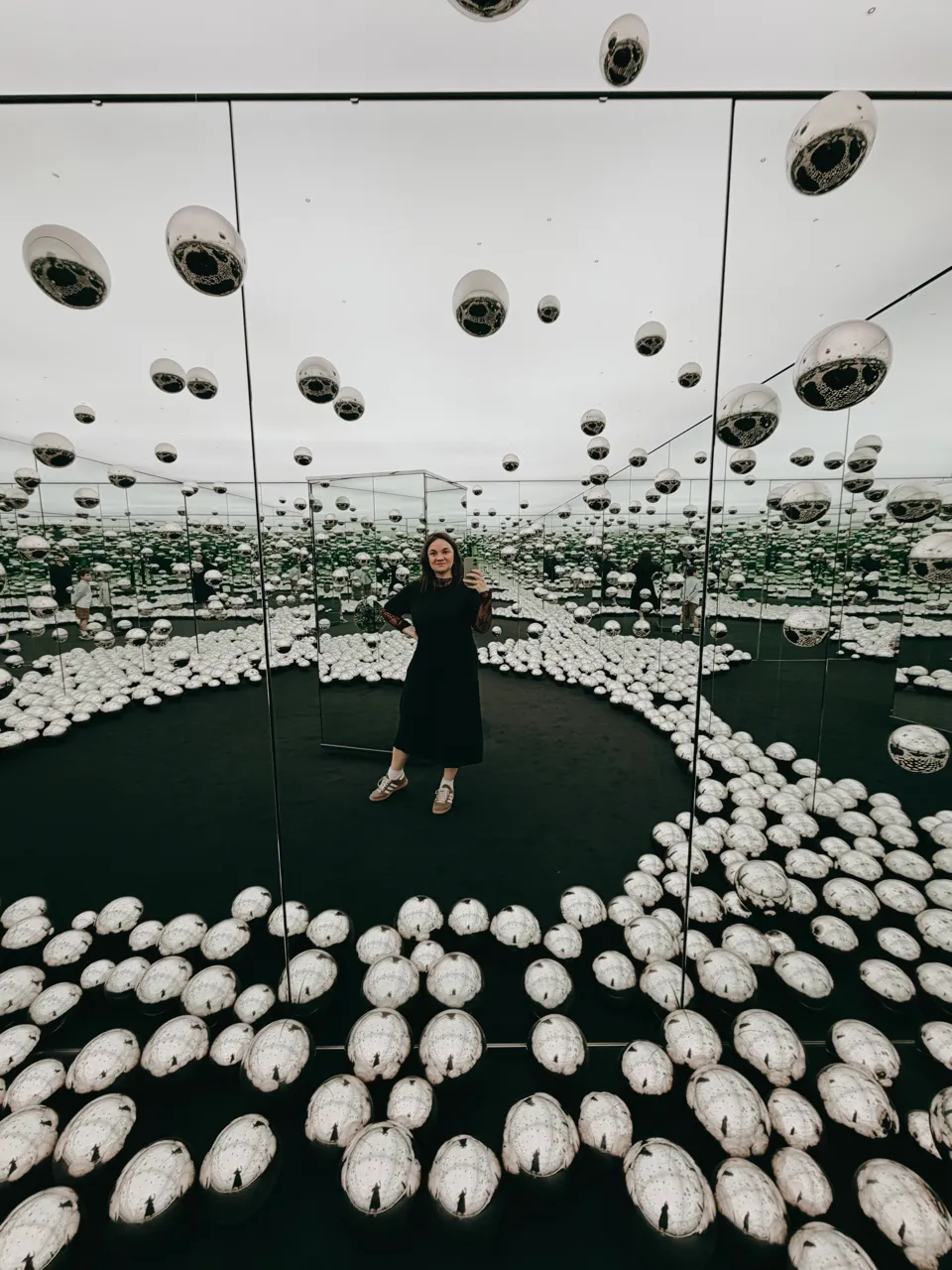
A few days ago, I visited The Impressionist Revolution: Monet to Matisse from the Dallas Museum of Art, a special exhibition currently on view at the Art Gallery of Ontario. Located on Level 4 of the AGO, the exhibition brings together works by artists including Claude Monet, Edgar Degas, Berthe Morisot, Vincent van Gogh, and Henri Matisse.
I have always felt drawn to art, especially painting and ballet, and I try to attend exhibitions and performances whenever it’s possible.
But this article is not primarily about the paintings themselves. It is about what may happen psychologically when we spend time with art — and why cultural experiences can become a meaningful part of life, particularly during periods of depression, loneliness, isolation, or a loss of meaning and pleasure.
What may happen when we look at art
A 2025 systematic review of 38 studies involving 6,805 participants found that viewing art was most consistently associated with eudaimonic well-being — a deeper sense of meaning, personal growth, inner engagement, and connection to life (Trupp et al., 2025).
At the same time, the evidence of a consistent effect on anxiety, mood, and other outcomes remains mixed. There is no direct line showing that contact with art causes joy or happiness; rather, that is not exactly what it is about. Art can make a person both happier and sadder, move them, or evoke complex emotions, while at the same time helping them feel the significance of an experience, understand themselves better, or see their situation within a broader context.
Can a museum visit reduce stress?
From what I can see in the research, there is no clear evidence that a single visit to a gallery directly reduces stress or cortisol levels. Longer-term patterns may still be worth noticing.
A 2025 study used data collected over up to 14 years from 6,932 to 10,428 residents of England. The researchers found that increases in cultural engagement were associated with increases in life satisfaction, quality of life, happiness, and the feeling that life is valuable and meaningful, as well as decreases in depressive symptoms, anxiety, and loneliness. This association was particularly evident among older adults with long-term health conditions and those living without a partner. Because this was observational research, it cannot show that cultural engagement caused those changes.
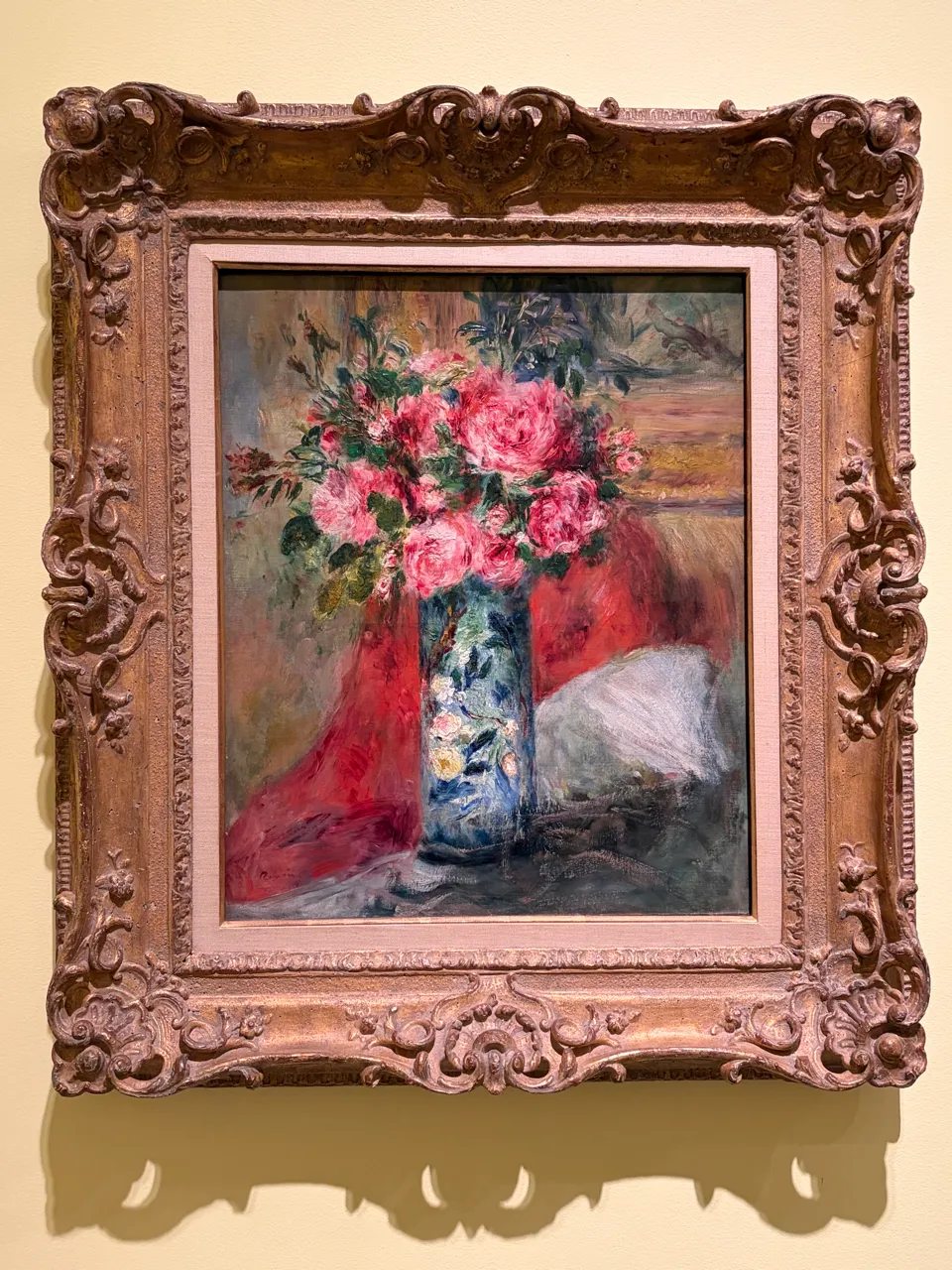
Peonies in a vase. 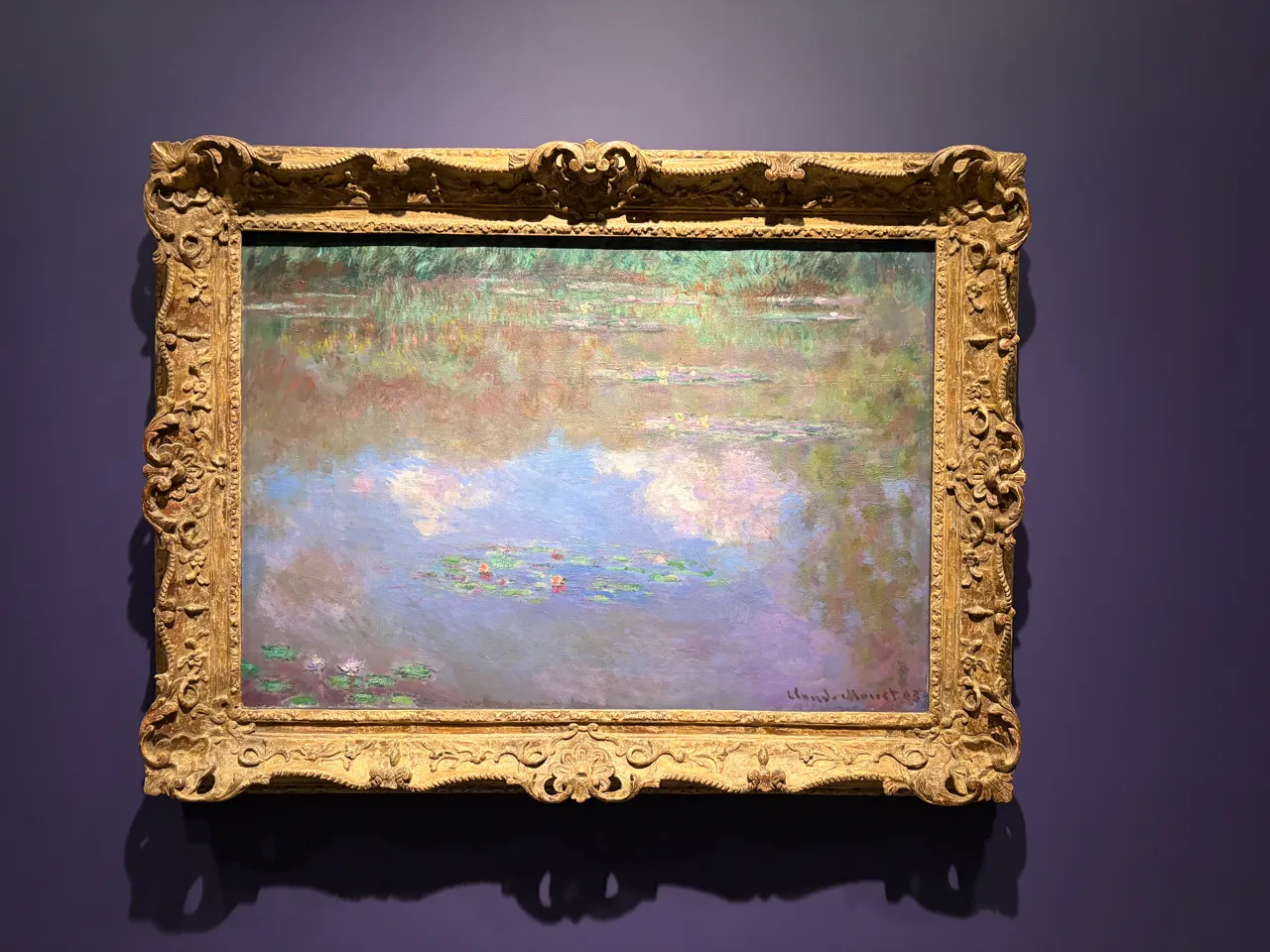
Water lilies on a pond. 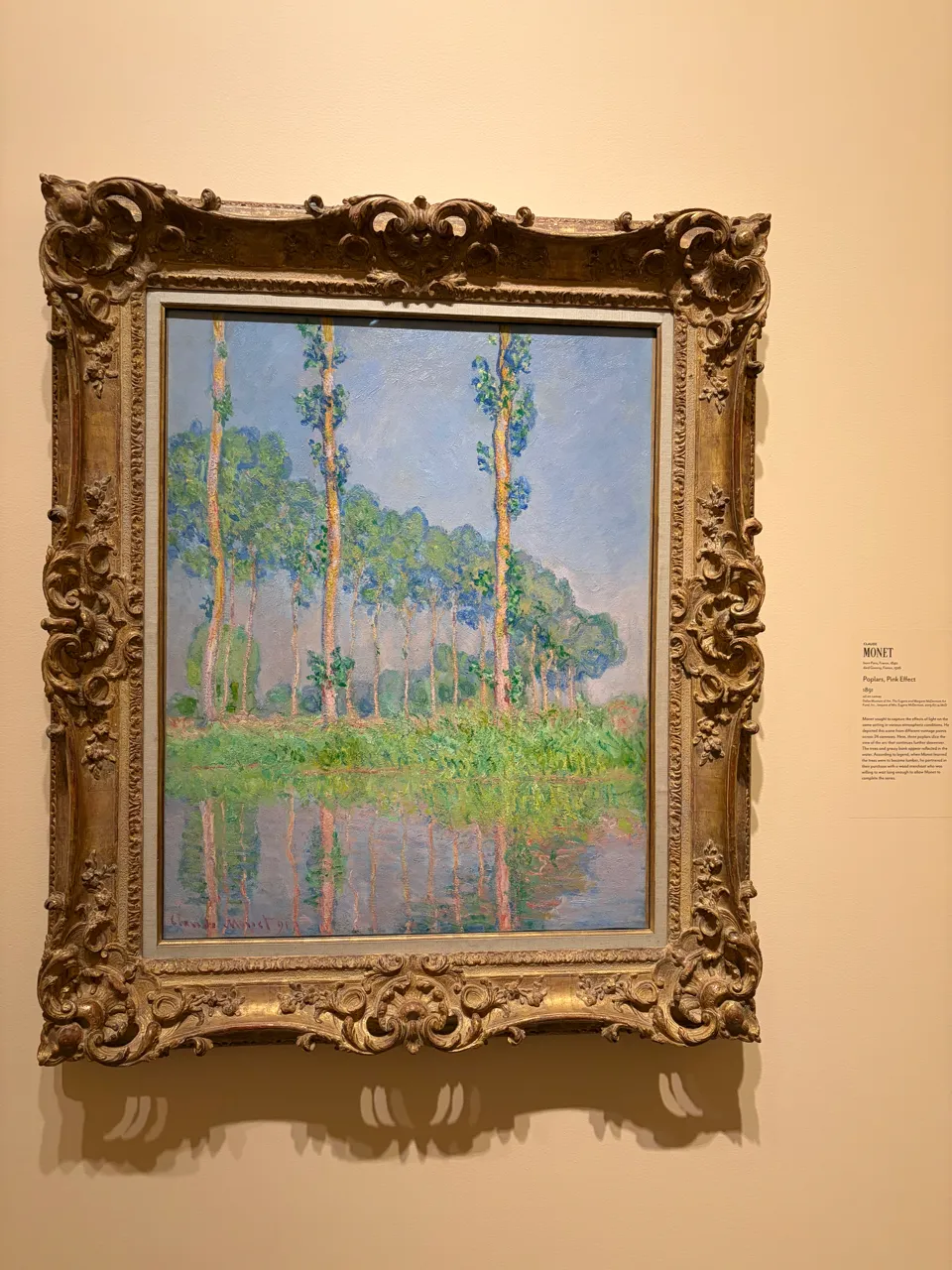
Poplars in the landscape. 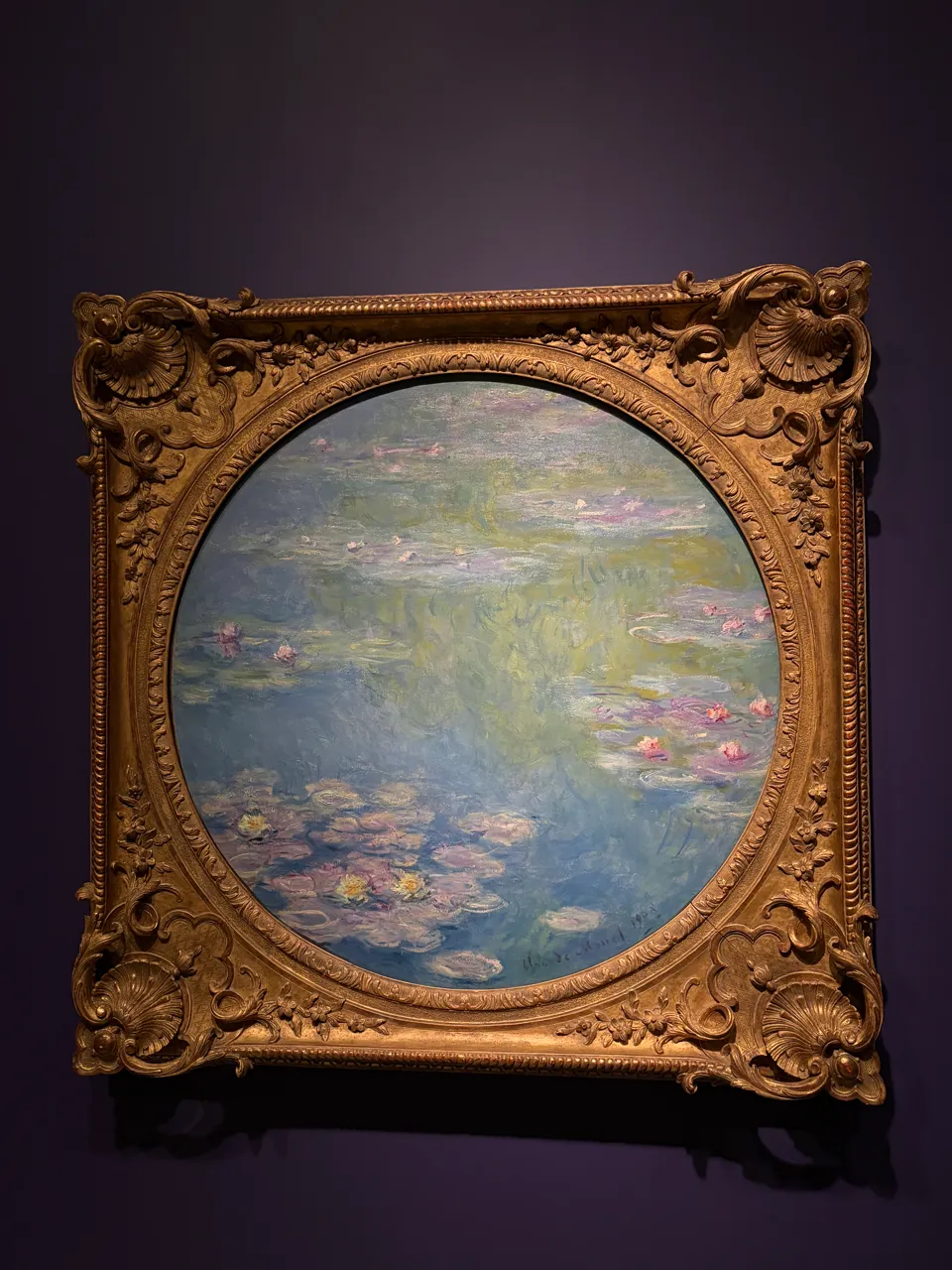
Water lilies in an oval composition.
Image 1 of 4
How art can support psychological well-being
-
Attention regulation. One important aspect of psychological well-being is the ability to direct and shift attention. When attention becomes caught in anxiety or rumination—repetitive negative thinking that is difficult to disengage from—viewing a painting can offer another point of focus. By slowing down and attending to colour, detail, space, and composition, a person may temporarily step out of the usual cycle of thought and become more present to what is in front of them.
-
Emotional regulation. Art allows a person to approach sadness, fear, loneliness, or hope in a relatively safe form. The feeling seems to exist both “inside me” and “inside the painting,” which makes it easier to observe and symbolize.
-
Meaning-making. A person connects the image with their own experiences, personal history, relationships, and identity. This particular area — meaning and inner fulfilment — has received the most consistent support in reviews of research on viewing art.
-
The experience of awe — reverence or wonder. The scale, beauty, or unusual nature of an artwork can temporarily reduce excessive focus on one’s own concerns and broaden one’s perspective.
-
Cognitive stimulation. Art activates curiosity, imagination, interpretation, memory, and the search for connections.
-
Social connection. A museum is not only about paintings. It involves leaving the house, movement, shared discussion, a sense of belonging to a cultural space, and sometimes contact with other people. In long-term studies, cultural engagement has also been associated with lower levels of loneliness.
-
Quality time with others. A gallery can become an opportunity to spend time with family outside the usual everyday environment, where conversations often focus on practical matters such as what to cook for dinner or which activity to enrol a child in. Going to a new place and sharing the experience of viewing paintings can create an opportunity to talk to one another on a deeper level, discover new topics for conversation, and share impressions together, which can become a stronger foundation for couple or friendship.
Three ways to look at art through the lens of mindfulness
Looking at art involves psychological skills that develop with experience: slowing down, noticing, feeling. You do not need to understand art history or be an expert to engage with a painting. You can begin with something simple.
-
Choose one painting. When you enter a gallery, first take in what is around you. Then choose one painting that draws your attention or simply feels more appealing than the others. There is no need to explain your choice. The practice begins with noticing what you are naturally drawn to.
-
Change your distance. Look at the same painting from different distances. Move closer, then step farther away, and notice what changes in your perception. This works especially well with Impressionist paintings: up close, the image may dissolve into separate brushstrokes, while from a distance, those marks come together into a vivid and coherent scene. The painting stays the same, but your experience of it changes.
-
Notice the emotion. Choose a painting and ask yourself what emotion it seems to express. The goal is not to guess what the artist intended, but to notice what the image evokes in you. It may feel calm, lonely, tense, tender, joyful, or difficult to name. There is no correct answer. What matters is your own experience of being with the painting.
Sources
- Trupp et al. (2025). Systematic review. The impact of viewing art on well-being—a systematic review of the evidence
- Finn et al. (2025). Longitudinal observational study. Dynamic longitudinal relations between arts and cultural engagement and health and well-being. Full text
- Art Gallery of Ontario. “The Impressionist Revolution: Monet to Matisse from the Dallas Museum of Art.”